You love training. Make room for movement.
Training is your time: the focus, the challenge, the satisfaction of showing up. BendyBar makes mobility and deep stabilizer muscle work a practical part of it, with controlled resistance in 10 minutes a day.
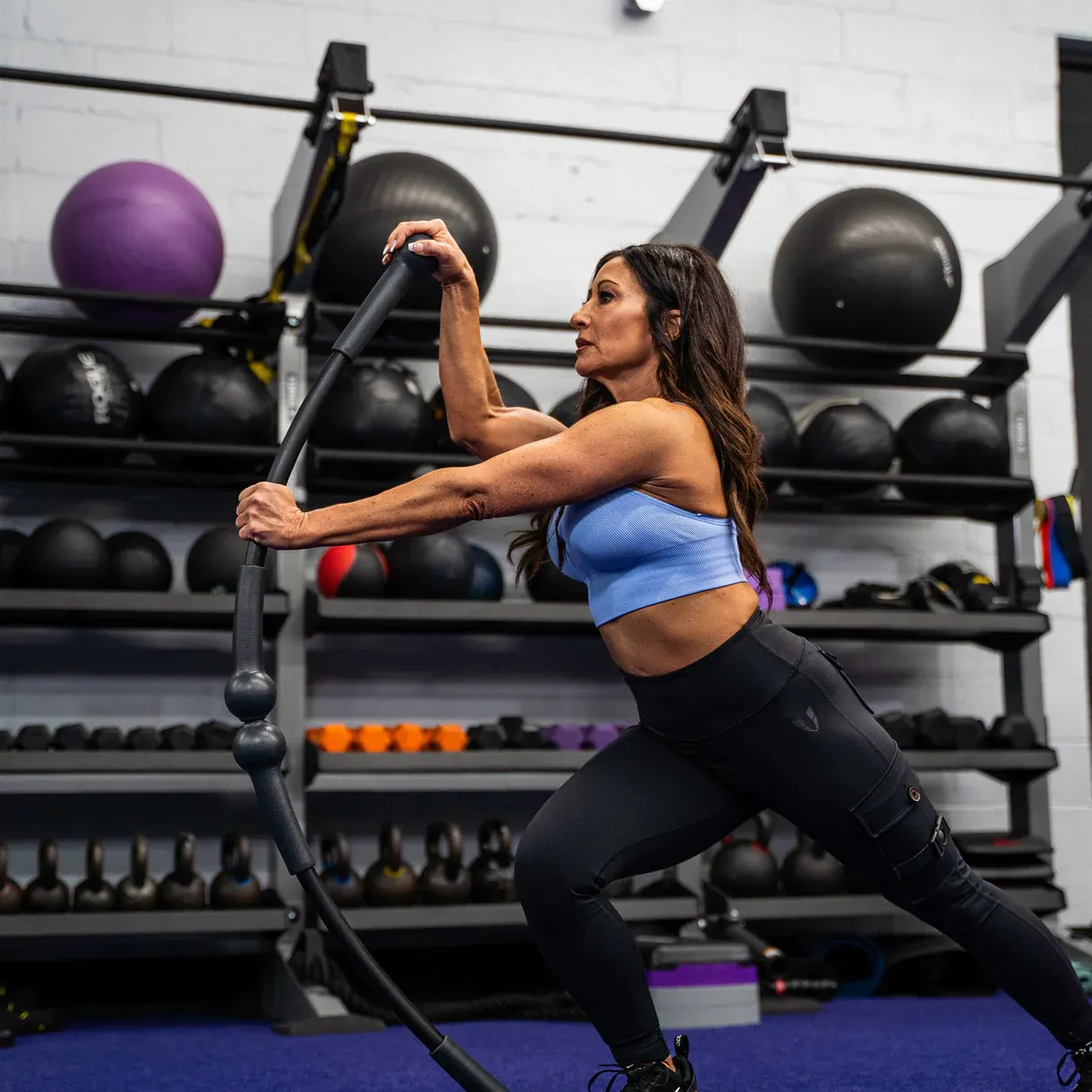
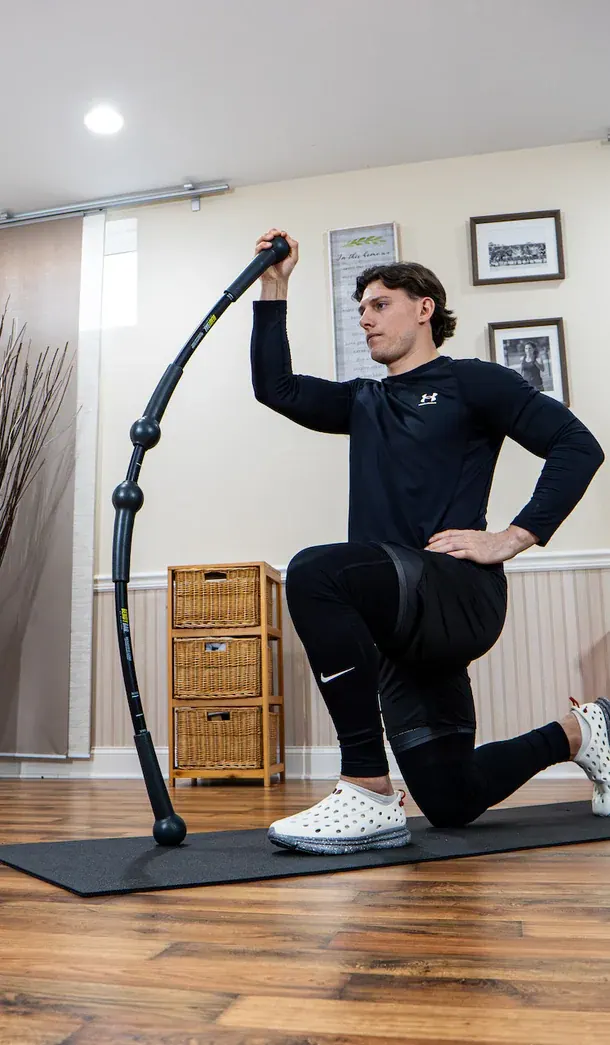
You want to train, not negotiate every movement.
Give mobility and stability a place beside your main lifts, without making your routine more complicated.
The Training Stack
Three slots. A more rounded routine.
1
Pre-lift · Prime the system
Before your working sets, practice controlled hip, mid-back, and shoulder movement. Keep the effort appropriate for a warm-up, rather than turning it into another workout.
- Hip + t-spine activation
- Scap stability primer
- Controlled preparation before working sets
2
Off days · Build the foundation
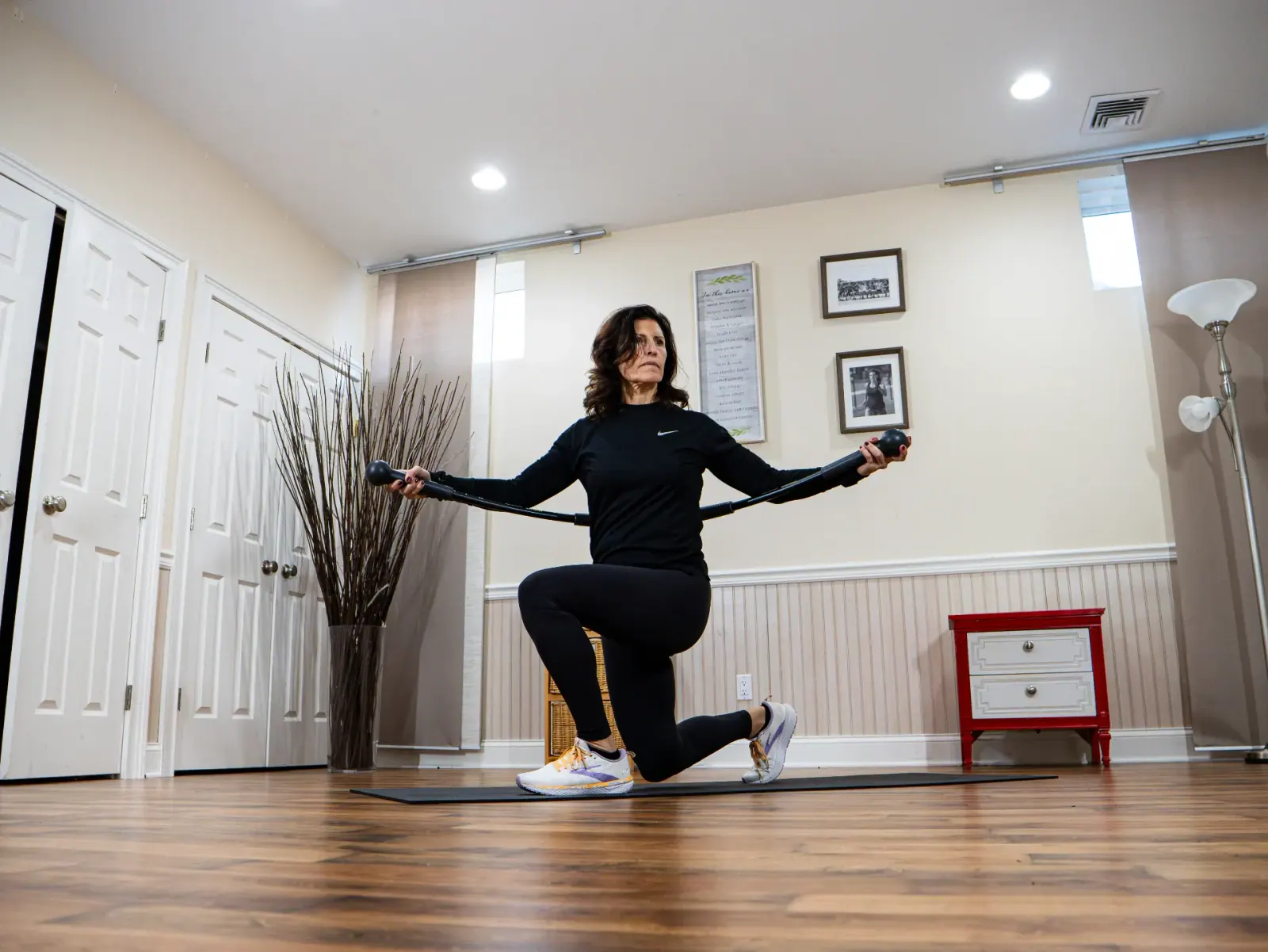
10 minutes a day. Medium-bar oscillation work for the deep stabilizer muscles strength training overlooks, at a level you control.
- Medium bar (57–63 in · 0–45 lb) progression
- Reactive core under load
- A routine short enough to repeat
3
Post-session · Stack recovery
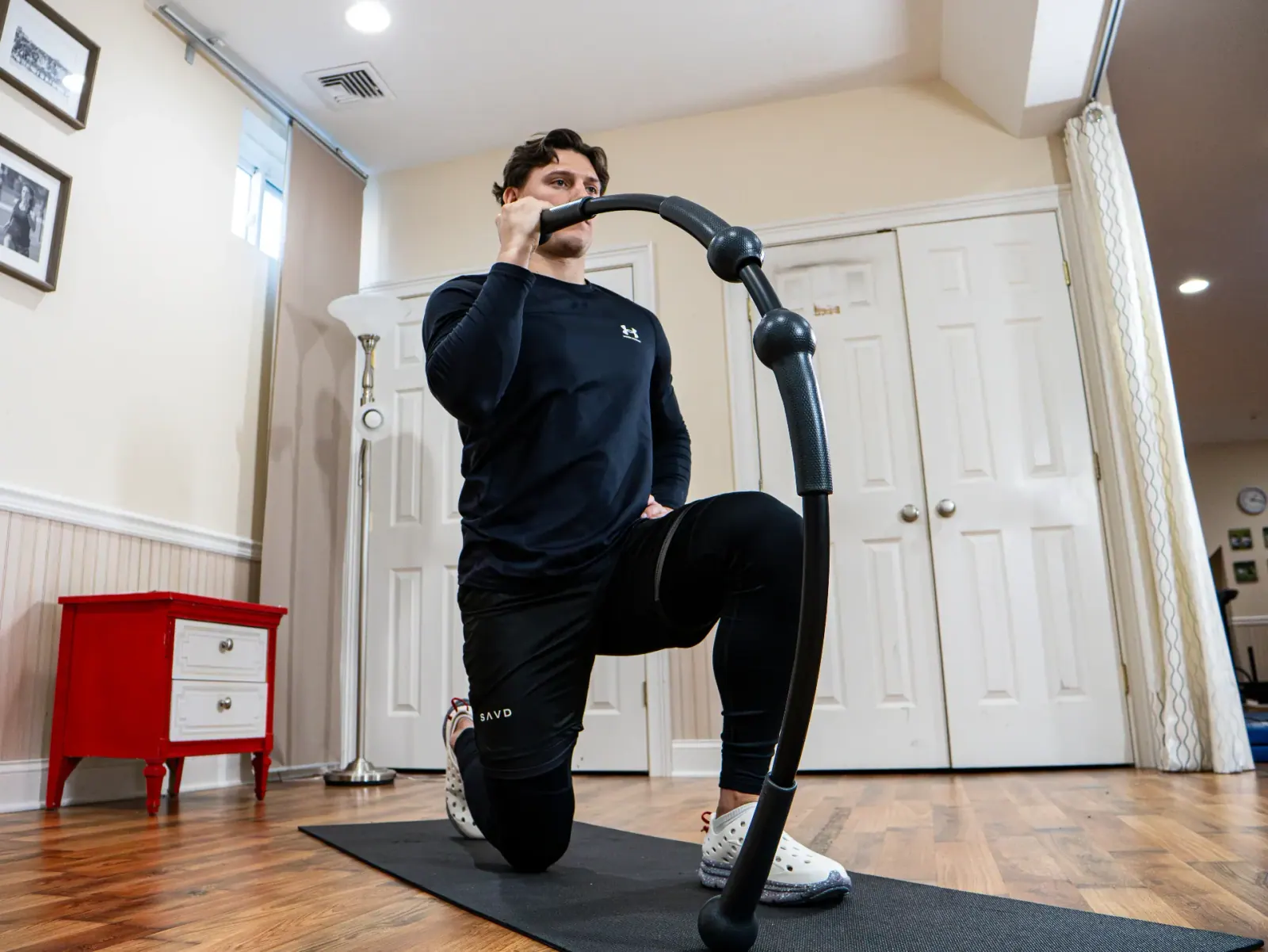
Five minutes after your last set. A gentle cooldown that takes the spine, hips and shoulders through easy range before you leave the gym.
- Gentle spinal range of motion
- Nervous system downshift
- Train harder tomorrow
Pick your starting point
Gear up properly.
Medium is the right starting bar for most lifters. Pair it with Light for warm-ups, or grab Max for advanced upper-body work.
$318.40
$398.00
Save $79.60The Complete System
Choose Your Bundle
Most customers start with 2 bars, the next resistance is ready the day you outgrow the first.
Choose your 2 bars
Medium + Medium is the standard pair. Mix in Light if you want a gentler entry bar.
Medium + Medium
Bar 1
0–45 lb
Bar 2
0–45 lb
- 2 BendyBars. Choose any 2 resistance levels
- Medium: 57–63 in · 0–45 lb
- Full Exercise Library
- Free standard shipping on bundles (contiguous U.S.)
- 1-Year Manufacturer Warranty
Free Standard Shipping
On bundles in the contiguous U.S.
Your Resistance Mix
Choose the level of every bar.
Routine Library
Full library and Daily Reset included.
Real Humans
Email or chat support, 7 days a week.
Why lifters are adding it to their warm-up.
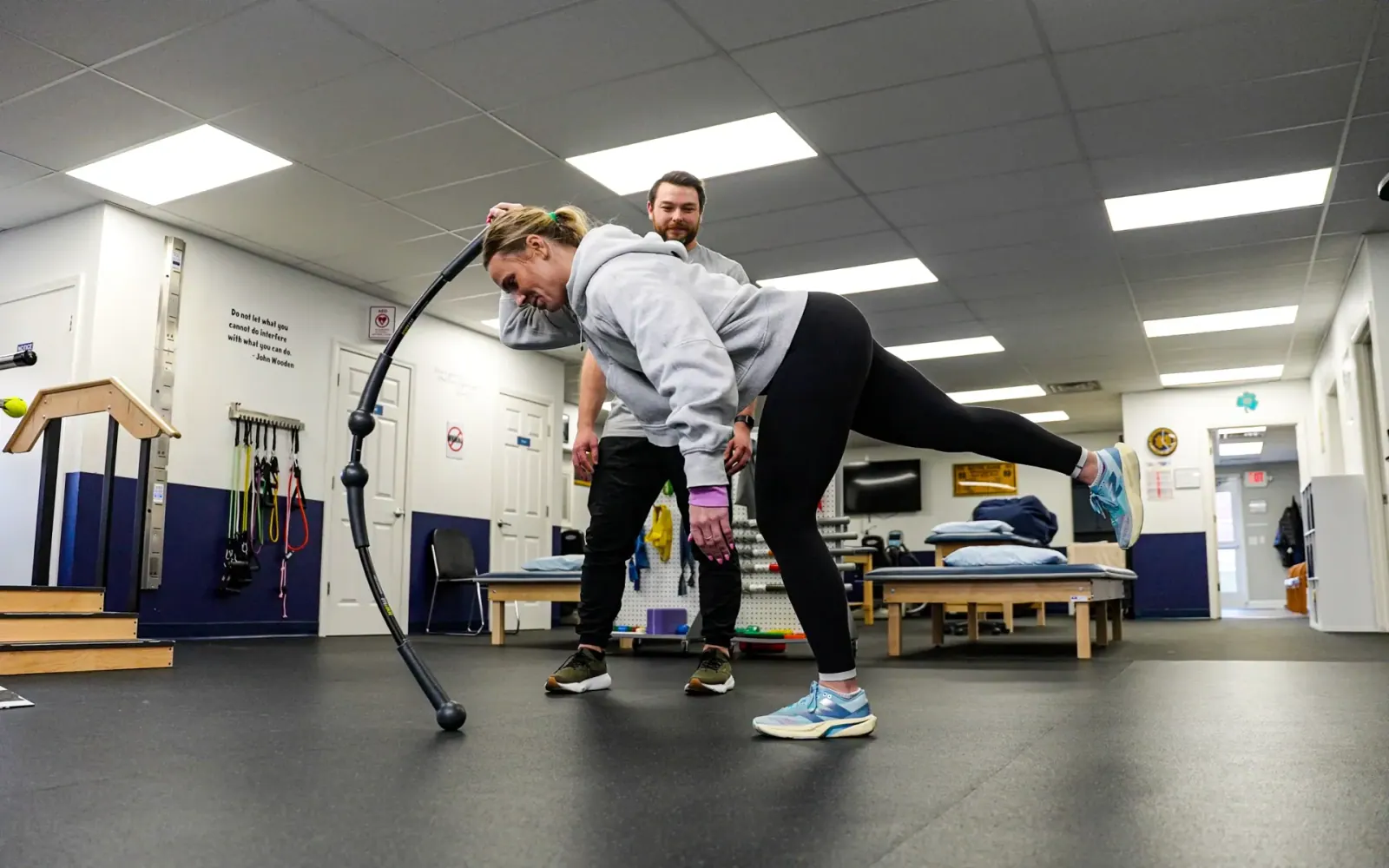
See how the BendyBar fits into a real training routine, primes stabilizers, opens up range of motion, and keeps the joints honest before heavy work.
In their own words.
1-year warranty on every bar
Free standard shipping on bundles (contiguous U.S.)
Secure checkout, real human support
The warmup your main lifts are missing
Nobody buys a mobility tool because mobility is exciting. They buy it because the bottom of a squat feels blocked, because pressing overhead means arching the lower back, or because the same shoulder complains every training block.
The BendyBar sits in the six to ten minutes before your first working set. Oscillating resistance loads and rebounds while you move, so the warmup does two jobs at once: it opens the position and wakes up the muscles that have to hold it under load.
This tends to suit you if
- You lift regularly and your warmup is currently five minutes on a bike
- Hip or thoracic stiffness is limiting your squat or overhead position
- You want accessory work that does not add another twenty minutes
- You train in mixed settings, home, gym, travel
- You want something that packs down and needs no rack or anchor
What lifters use it for
- A six-minute pre-lift block that gets the stabilizers online
- Better overhead position without borrowing range from the lower back
- Anti-rotation and bracing work between sets
- Deload-week movement that keeps range without adding fatigue
- Post-session downshifting so the next day starts better
Oscillating resistance versus bands and static stretching
A band's tension climbs as it stretches, which is useful for some things and unhelpful when the hardest part of a position is the end of it. Static stretching before lifting opens a position without teaching you to own it.
The BendyBar's asymmetrical shaft loads and rebounds continuously, so tension is present the whole way through the rep and the stabilizing muscles have to keep working rather than switching off at the top. That is closer to what a lift actually demands.
Medium, roughly a 0 to 45 lb range, is a practical starting point for regular exercisers. Max, up to roughly 55 lb, suits experienced upper-body work.
Weighing it against a leverage-style mobility stick? Read the independent BendyBar vs Stick Mobility comparison.
BendyBar vs resistance bandsGuide: Oscillating bar vs resistance bandGuide: Dynamic vs static stretching
Routines that fit around training
Thoracic rotation warmup
The mid-back drill most pressing problems trace back to.
Core anti-extension circuit
Bracing work that transfers directly to loaded lifting.
Standing hip opener
Hip prep before squats and hinges, no floor work.
The full exercise library
Written routines and follow-along video series by goal.
Go deeper
Common questions from lifters
Will this replace my strength training?
No, and it is not meant to. It replaces the vague five minutes of stretching before your first set with something that prepares the position and the muscles that hold it.
Which resistance level should I choose?
Medium is a practical starting point for regular exercisers. Choose Max if you have significant upper-body strength and want the widest load range.
Can I use it on rest days?
Yes. A ten-minute low-intensity block on off days is one of the most common uses, since it maintains range without adding meaningful fatigue.
Does it need an anchor or a rack?
No. Every routine in the library is done standing or half-kneeling with a few feet of clear floor.
Fix the warmup, then judge the lifts
Three resistance levels, the full routine library, and free standard shipping in the contiguous U.S.
Pick your resistanceMake time for the training you love
Keep the challenge. Make space for control.
You already know how to put in effort. Give mobility and stability a short, repeatable place in your routine too. 10 minutes a day, backed by a 1-year warranty.